
Importing bank statements into Xero is straightforward when you have a working bank feed. The trouble starts when you do not. Old transactions outside the feed window, clients on banks Xero does not support, scanned paper statements from a shoebox handover. All of it has to land in Xero somehow, and retyping a year of transactions by hand is not really an option.
Datamolino converts PDF bank statements into a CSV that Xero will import in one go. It works on digital PDFs from online banking and on scans, and it works for any bank in the world. This guide walks through the process and covers the validation that catches errors before they reach Xero. If you want the broader picture on how the Xero integration handles invoices, receipts, and bank data together, that page covers the full setup.
When you need this workflow
Bank feeds cover most reconciliation work. The gaps are still real, though:
- The feed has gone down or skipped transactions for a period.
- You are reconciling history that falls outside the feed window.
- The client banks somewhere Xero does not connect to.
- You only have scanned PDFs (paper-based handover, archived statements).
- A client is being migrated into Xero and you need months of history at once.
In any of these cases, the job is the same: turn a PDF into a CSV Xero will accept.
Step 1: Upload your bank statement to Datamolino
Sign in to Datamolino and open or create a folder for bank statements. Drag the PDF onto the upload area, send it in by email, or use the mobile app. Both digital PDFs and scans work. Multipage statements are handled automatically, so no need to split them beforehand.
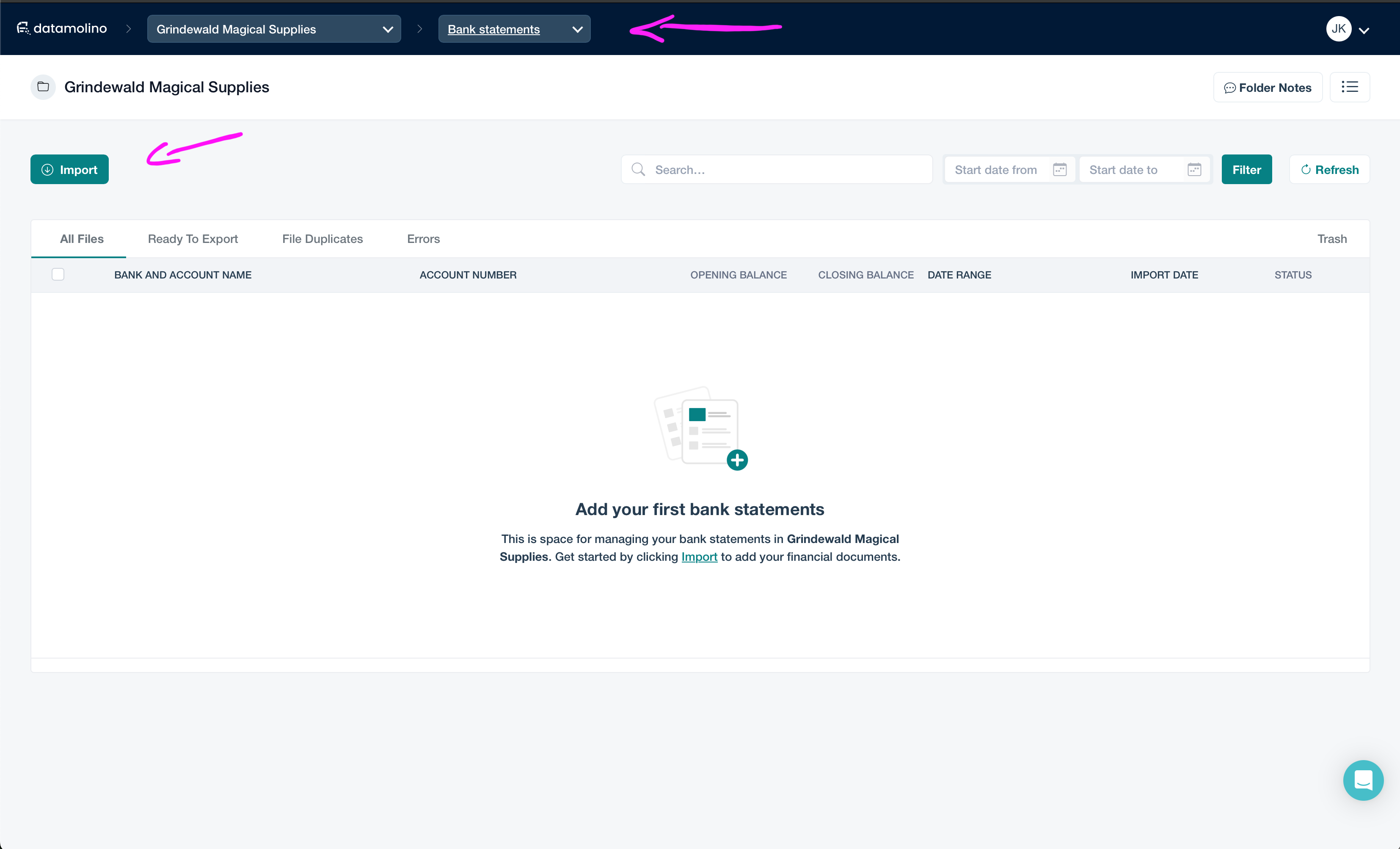
Upload bank statement PDFs that you want to process:

Step 2: Let Datamolino extract the data
Once the PDF is up, Datamolino reads the statement and pulls out the structured data: account name, account number, statement period, opening and closing balance, and every transaction line with its date, description, debit, and credit. No template setup. The same workflow runs whether the statement is from Lloyds, Westpac, or a regional credit union you have never heard of. The full technical detail is on the OCR data extraction from bank statements page if you want to know what is happening under the hood.
Get a detailed error message if validation fails:

Step 3: Validate the data before export
This is where rework gets prevented. Datamolino runs two checks on every statement. The balance tally confirms that opening balance plus credits minus debits equals closing balance. If the maths does not add up, you see a flag before export. That catches missed lines, OCR errors on scans, transactions split across pages.
The date range check confirms the captured transactions cover the full statement period with no gaps. You can edit any line before export. Fix a description, correct a debit, split or merge a row. Whatever the statement needs.
Your bank statement data is ready for export:

Document detail showing the extracted bank statement:

Step 4: Export to CSV
Once the data passes validation, export it. Three options:
- The full statement as one CSV.
- A filtered subset (specific date range, or a single account from a multi-account statement).
- Multiple statements merged into one CSV. Good for loading a year of history at once. If you need to convert PDF bank statements into CSV for non-Xero use as well, that walkthrough covers the generic version.
The CSV uses the column structure Xero expects, so no manual reformatting in Excel.
One click export of bank statement data:

Filter data by text or date and export only relevant transactions:
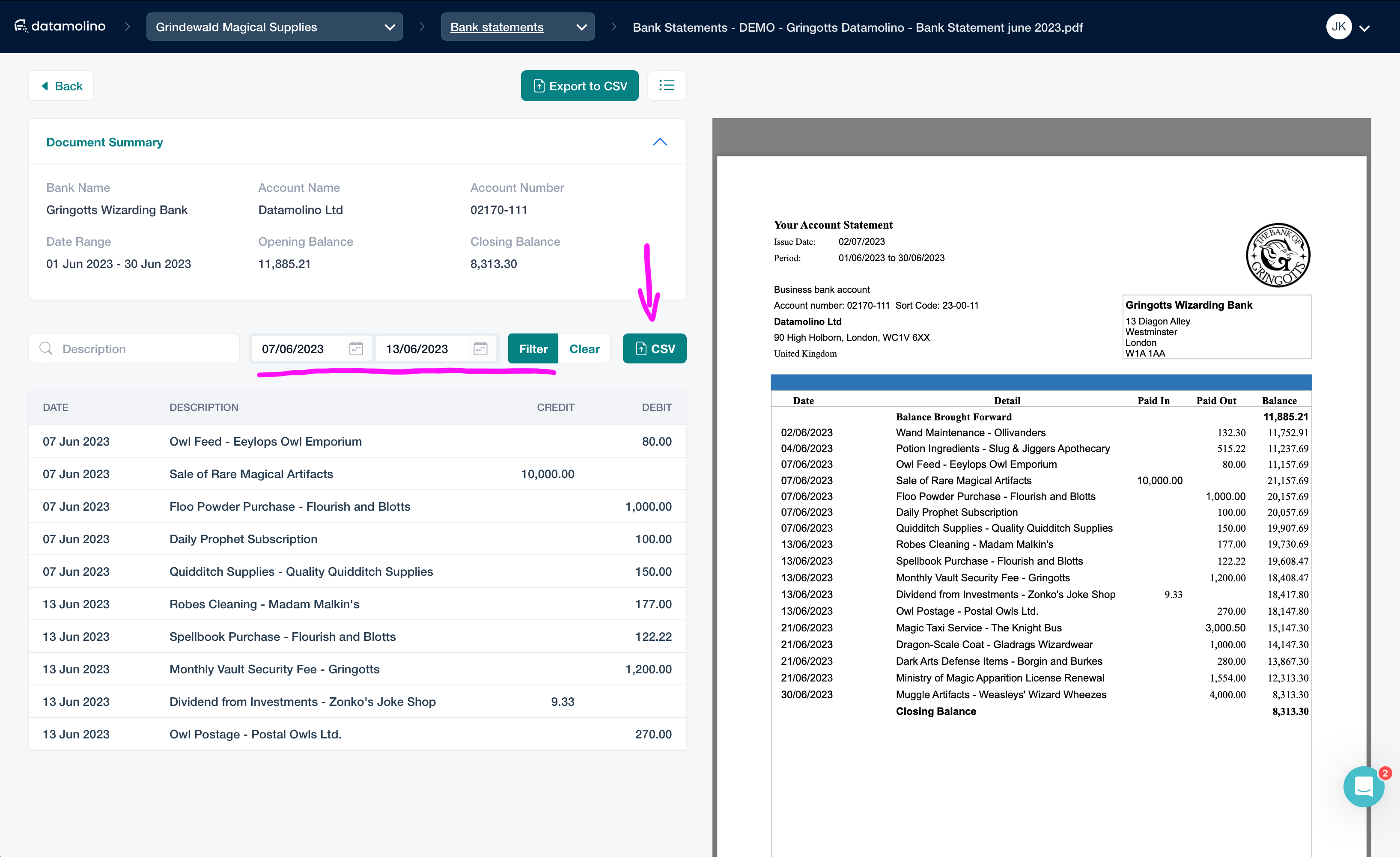
Bulk export multiple bank statements into one CSV and choose date range:
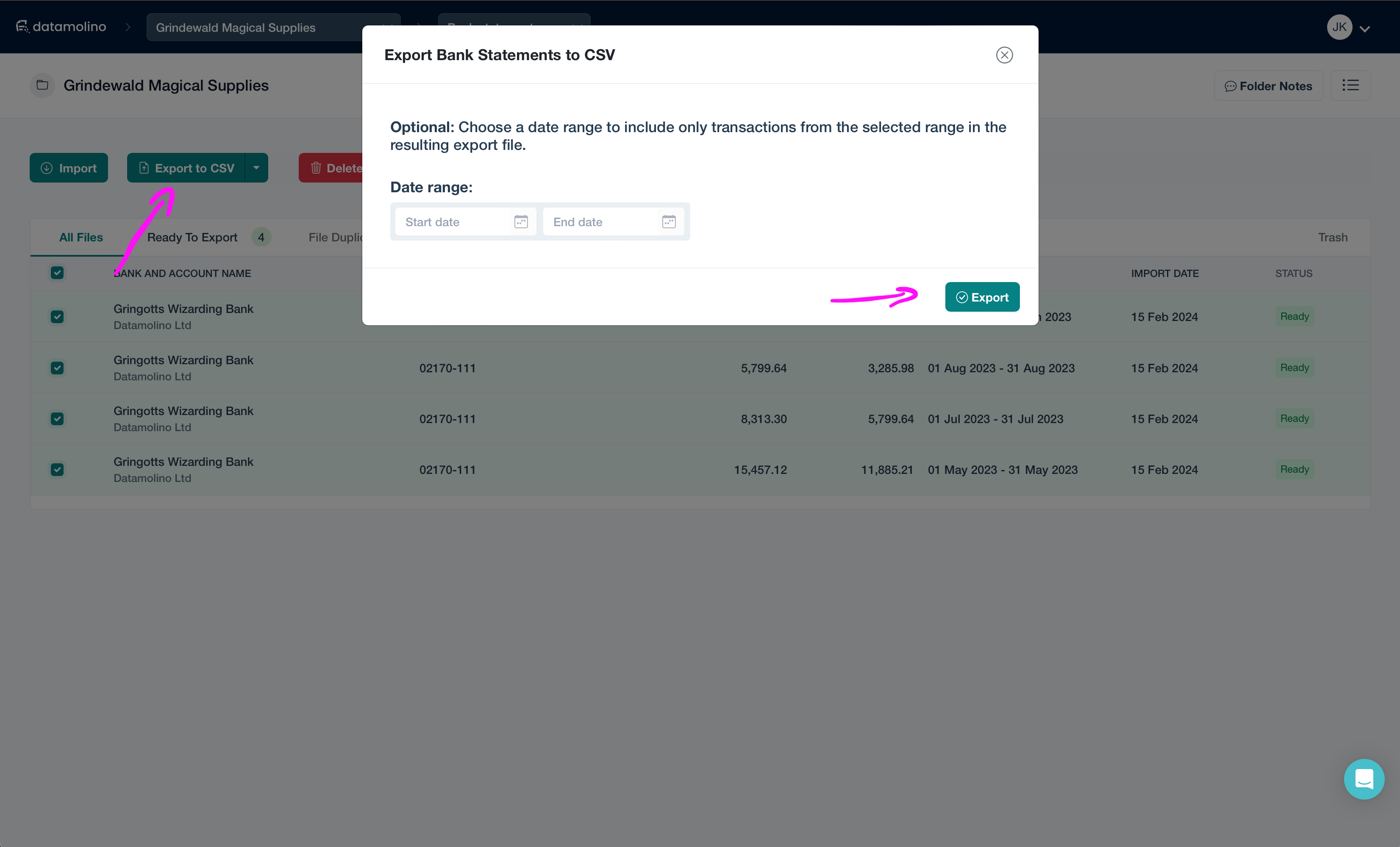
Step 5: Import the CSV into Xero
The Xero side is the part most accountants already know:
- In Xero, click Accounting and choose Bank accounts.
- Find the account you are importing into, click Manage Account, and choose Import a statement.
- Upload the CSV from Datamolino.
- Review the column mapping. Xero usually maps it right first time and remembers the mapping for next time.
- Preview the transactions and complete the import.
If something looks off, you can roll the import back in Xero before reconciling. Once the data is in, you can match transactions against bills, run cash coding, or reconcile as normal.

Choose the bank account you want to import your transactions into and click “Manage Account” and “Import a statement”:

Select your file and upload it to Xero for processing. Then click “Next”:

Review the column mapping. Xero typically maps the columns correctly and remembers your mapping between imports. You will see a preview of your data in the next steps:

There is a transaction preview to see if the columns are mapped correctly:

Review and complete the import into Xero. You can always rollback the import if anything goes wrong:
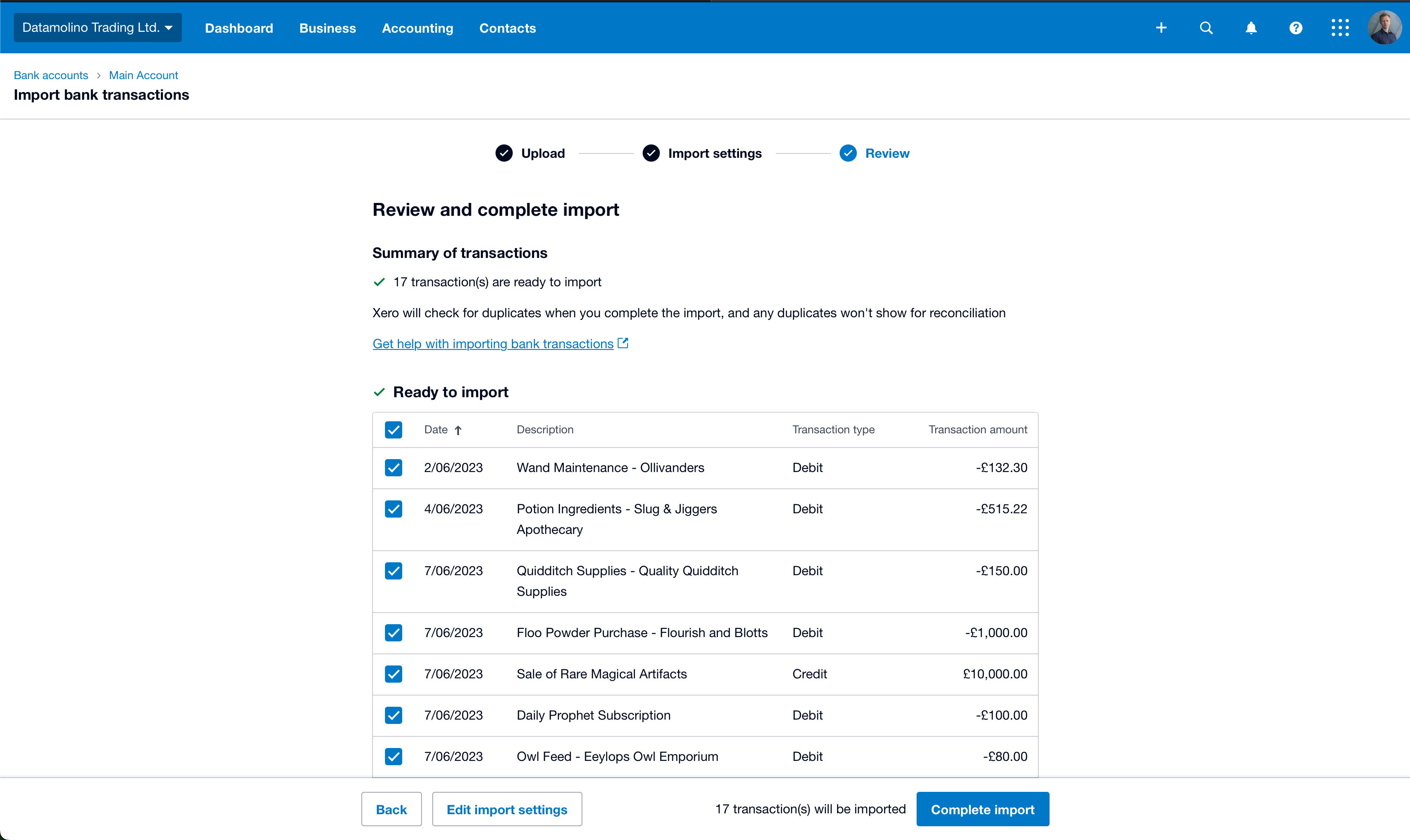
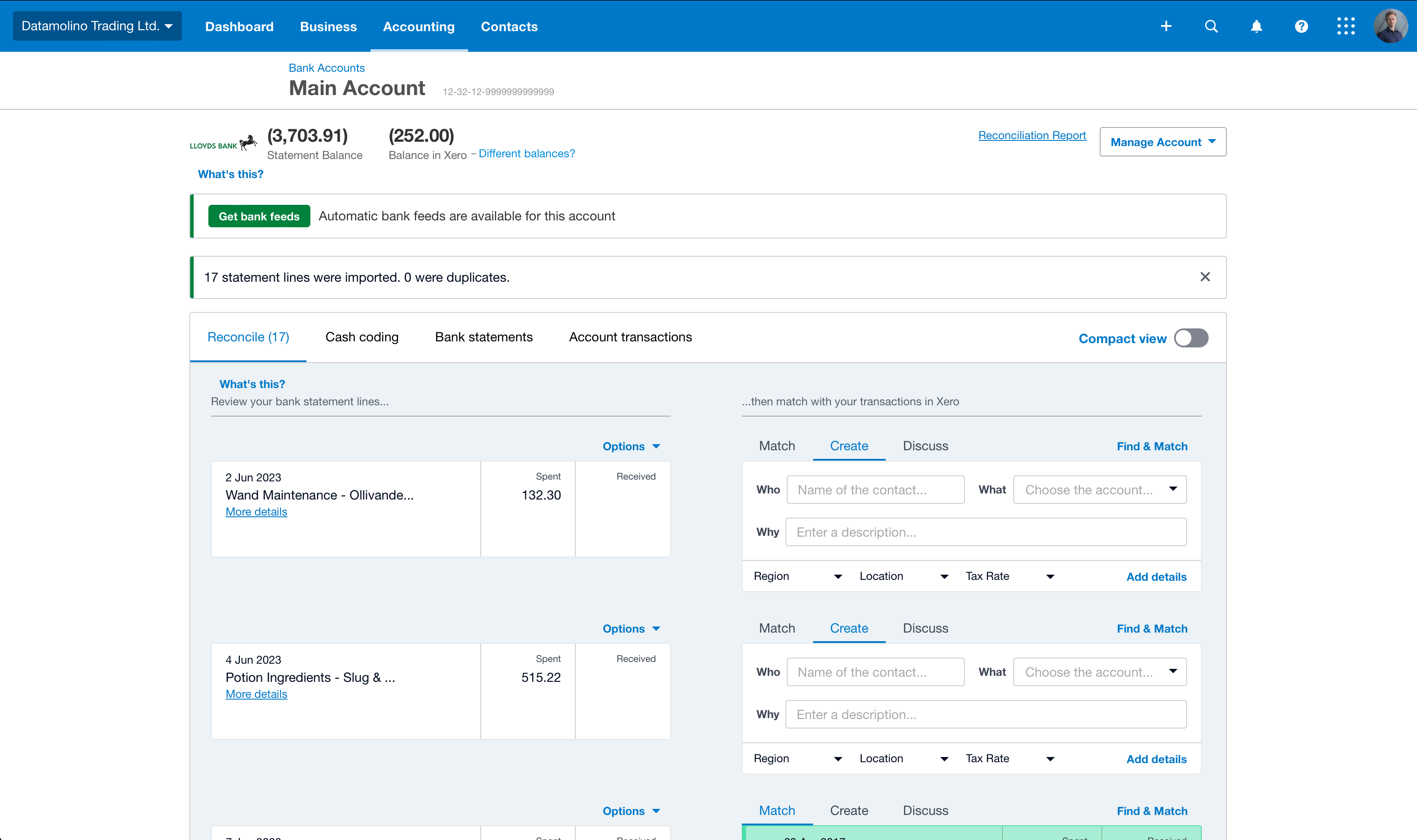
Your data is in Xero and you can reconcile it with your receipts or choose to do cash coding of the transaction lines:
Why this beats manual entry
Retyping a 12-month statement by hand takes hours, and the errors surface during reconciliation and cost more hours. The Datamolino workflow does the same job in a few minutes per statement, with the balance tally catching extraction issues before they hit Xero.
Frequently asked questions
Can I import bank statements from any bank into Xero using Datamolino?
Yes. There is no per-bank setup. The same workflow runs on any statement that has the transaction data on it, regardless of which bank or country it is from.
Does Datamolino validate the bank statement data before I import it into Xero?
It does. Every statement goes through the balance tally (opening + credits minus debits = closing) and the date range check (full coverage of the statement period). If anything fails, you see a flag before export, so issues get fixed in Datamolino, not after the data lands in Xero.
Can I merge multiple bank statements into one CSV file for Xero?
Yes, and you can filter the date range before export. This is the fastest way to load historical data when you are migrating a client into Xero or reconciling a long stretch of back-dated transactions.
What if my bank statement is scanned, not a digital PDF?
Both work through the same workflow. Scan quality matters (a clean full-page scan extracts more reliably than a phone photo at an angle), but the platform is built for both.
Try Datamolino free — process 100 documents at no cost.